
Clearing Wet Lots & Tax Ditch Land in Sussex County, DE
Plenty of land in Sussex County, Delaware is low and flat, and some of it stays wet for months. Clearing wet lots and land along tax ditches takes more checking than clearing dry pine woods: part of the property may be a wetland that state or federal rules protect, a tax ditch right-of-way may cross it, and the soil can be soft enough to rut under a machine from winter into spring. Here's how to tell what you have and which office to call before any work starts.
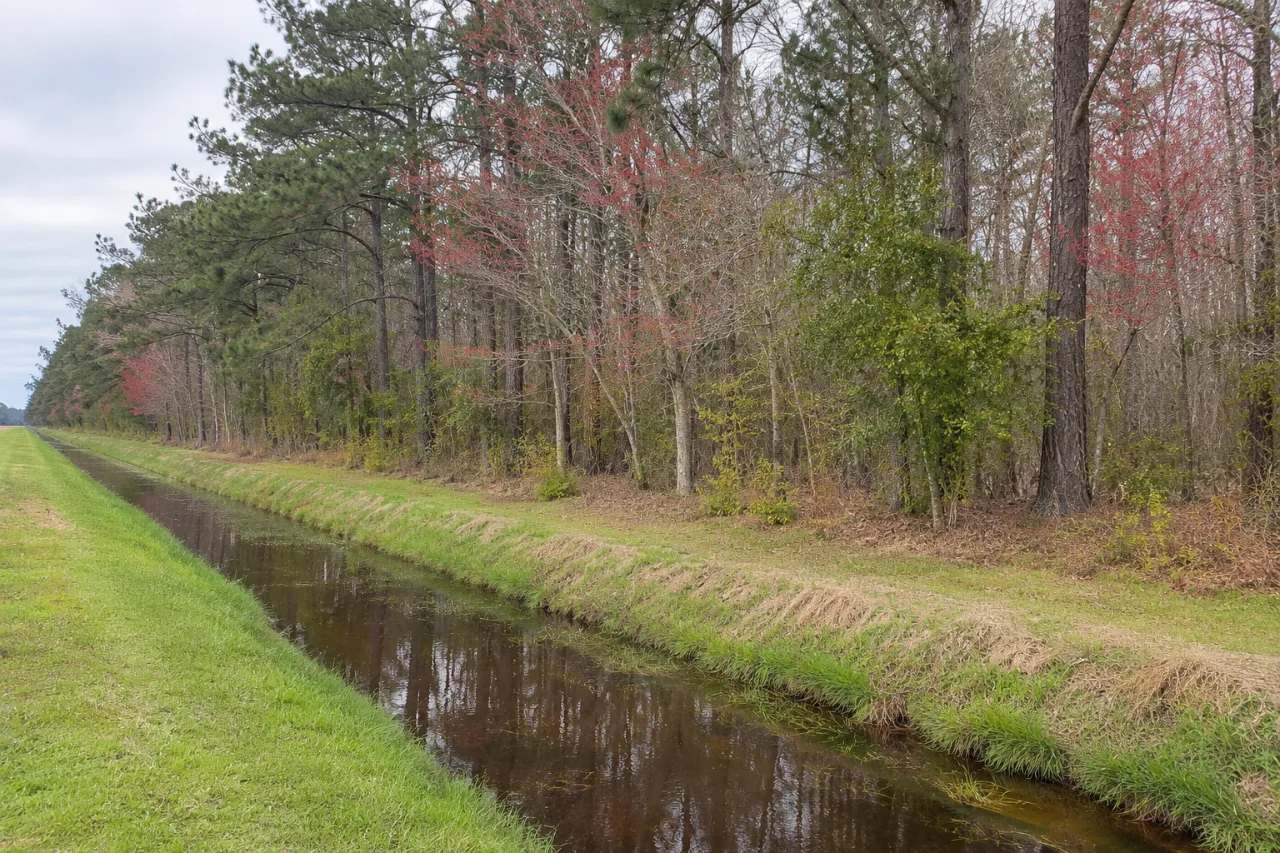
Signs a lot is wet
NRCS describes Fallsington soils, found on flats, swales, drainageways, and depressions in Delaware and neighboring states, as poorly drained, with a seasonal high water table 0 to 12 inches below the surface from December to May. The surface is very dark grayish-brown sandy loam, and the native woods are red maple, sweetgum, and black gum. Compare that with the sandy uplands, such as Evesboro sand, which NRCS rates excessively drained.
On the ground, that means a lot that looks fine in August can hold standing water in March. Clues include water sitting in low spots after winter rains, dark soil, and red maple and black gum crowding out the pines.
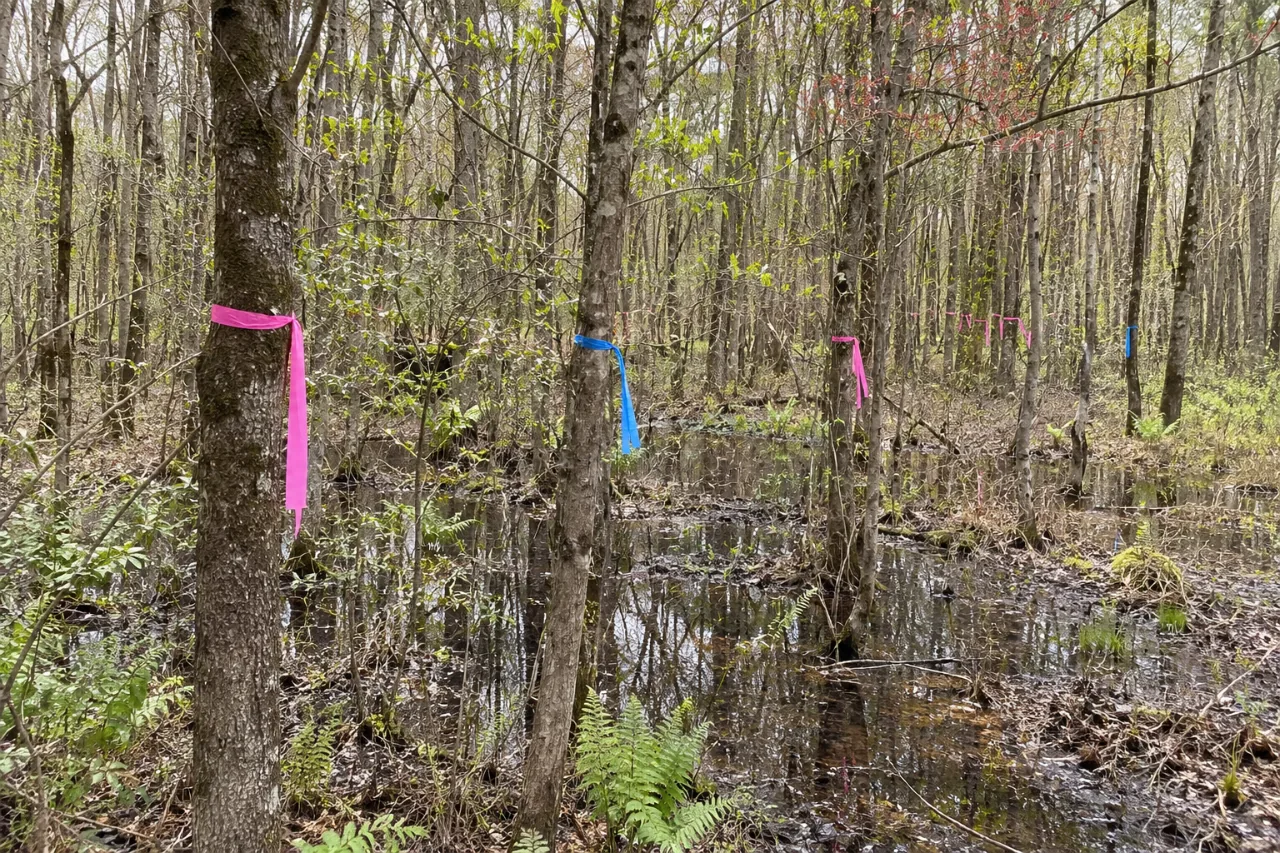
Wetlands: who regulates what
DNREC's wetlands page says the state regulates "all of its tidal wetlands as well as those non-tidal wetlands that include 400 or more contiguous acres." Under the Subaqueous Lands Act it also regulates tidal waters up to mean high water and non-tidal rivers, streams, lakes, and ponds up to the ordinary high water line. Its permit categories include fill, ponds, stormwater, and road and utility crossings.
Smaller freshwater wetlands can still fall under federal rules. DNREC's wetlands program page lists the U.S. Army Corps of Engineers "Regulator of the Day" at 215-656-6728, next to its own Wetlands and Waterways Section at 302-739-9943. DNREC also describes the Wetlands Stewardship Act as establishing "Delaware's first comprehensive state program to protect non-tidal wetlands," with an advisory committee guiding how it's carried out, so check for current state rules before clearing a wet area.
To check your land, DNREC offers a map index of state-regulated tidal wetlands and a form to request a jurisdictional determination or a wetland map change. If there's doubt, have the boundary flagged on the ground before machines arrive and ask both agencies whether your project needs a permit.
County buffers on new residential projects
In May 2022, Sussex County Council adopted a revised ordinance requiring buffers along wetlands and waterways, which the Center for the Inland Bays describes as applying "only to new residential projects proposed and built within the County's jurisdiction." If your lot sits in a newer subdivision, the recorded plat may show buffer areas. Planning & Zoning, (302) 855-7878, can tell you what applies to your parcel.
Tax ditches: the basics
A tax ditch is a drainage channel run by a Tax Ditch Association, a legally formed group of the landowners in its watershed, with ditch managers and a secretary-treasurer. DNREC's questions and answers put channels at six to 80 feet wide and two to 14 feet deep. Each has a right-of-way, an easement that gives the association permanent access to maintain the ditch and spread what it cleans out. The association has access but doesn't own the land, and the right-of-way isn't a public path.
Right-of-way width "varies," measured from the top of the bank or from the centerline of the ditch or pipe. The state map at de.gov/taxditchmap shows them, and DNREC's tax ditch application at taxditch.dnrec.delaware.gov provides a formal letter with right-of-way information for a parcel. The Tax Ditch Program is at 302-855-1930, and DNREC's Drainage Program office is at 21309 Berlin Road, Unit 6, in Georgetown.
What clearing is allowed in a right-of-way
DNREC's right-of-way fact sheet and land development guidelines set the limits:
- Trees can be flush cut to the top of the soil. Stumps cannot be removed.
- Nothing permanent goes in it: no buildings, sheds, fences, driveways, patios, pools, animal pens, gardens, or landscaping, and no wells or septic systems.
- It must stay passable "for mowing, large maintenance equipment and/or disposal of soil," so no stockpiles, brush piles, or silt fence blocking it.
- Yard waste and brush stay out of it, so they can't wash in and block the ditch.
- Maintenance by the owner is allowed: mow with the blade set high and avoid broad-spectrum herbicides.
- Utility poles or boxes sit at least 25 feet from the top of the bank.
Changing a tax ditch, its right-of-way, or its drainage boundaries takes a court order change signed by all the parties. Work in the ditch channel itself can need approval from the Sussex Conservation District, DNREC, or the Army Corps.
Building on a low lot
Wet ground changes the order of work. The septic site evaluation by a licensed Class D soil scientist comes first and shows what the soil allows; DNREC's septic program is at 302-739-9947. The county's Residential Standard Plan still applies at 5,000 square feet of disturbance, and the state rules give 14 calendar days to stabilize disturbed ground. On a flat lot, silt fence goes along whichever side the water leaves by, such as toward a road ditch or a tax ditch. Lot clearing has the full sequence.
Working soft ground
Ask how the contractor plans to keep from rutting low ground: waiting for the dry months, using tracked machines, keeping heavy loads on the high side, or mulching in place so trucks don't have to drive through. Ruts in a wet area can turn a clearing job into a repair job, and soft ground slows the work, which shows up in an hourly or daily price. The cost guide explains how quotes are built.
Wet lot and tax ditch questions
Can a contractor clear right up to a tax ditch?
Into the right-of-way, trees can be flush cut, but the stumps stay and nothing can be piled there. Work in the ditch channel itself can need separate approvals. Call the Tax Ditch Program, 302-855-1930, first.
How can an owner tell if a low spot is a wetland?
Start with DNREC's map index for state-regulated tidal wetlands, then ask DNREC's Wetlands and Waterways Section (302-739-9943) and the Army Corps Regulator of the Day (215-656-6728) about freshwater areas. A flagged boundary on the ground helps everyone.
Can fill be brought in to raise a wet lot?
Outside wetlands, waterways, and tax ditch rights-of-way, fill is part of the site plan. Inside them, fill is one of the activities DNREC permits, and federal rules may apply too, so ask before any truck arrives.
Where can I see whether a tax ditch crosses my land?
The state tax ditch map at de.gov/taxditchmap shows ditches and rights-of-way, and DNREC's application at taxditch.dnrec.delaware.gov provides a formal letter for a parcel.
How the referral works
Tell us where the land is, how wet it gets, and whether a ditch or a mapped wetland is on it, if you know. One independent contractor who works in your part of Sussex County gets your request, looks at the ground, and gives you a written price. You decide whether to hire them, and the referral is at no cost to you.
Have land in Sussex County that needs clearing?
Call or send a few details. One independent contractor gets your request, and the referral costs you nothing.