
Underbrush Clearing in Sussex County, DE
Underbrush clearing in Sussex County, Delaware means opening up woods that have filled in below the canopy: greenbrier and honeysuckle climbing everything, multiflora rose arching across the paths, and American holly and sweetgum sprouts packed between the loblolly pines. Most owners want to keep the good trees and take out the tangle beneath them, for a view, a yard, a trail, or just to see their own property again. Here's how the work is done, what tends to come back, which plants are on Delaware's invasive list, and what it costs.
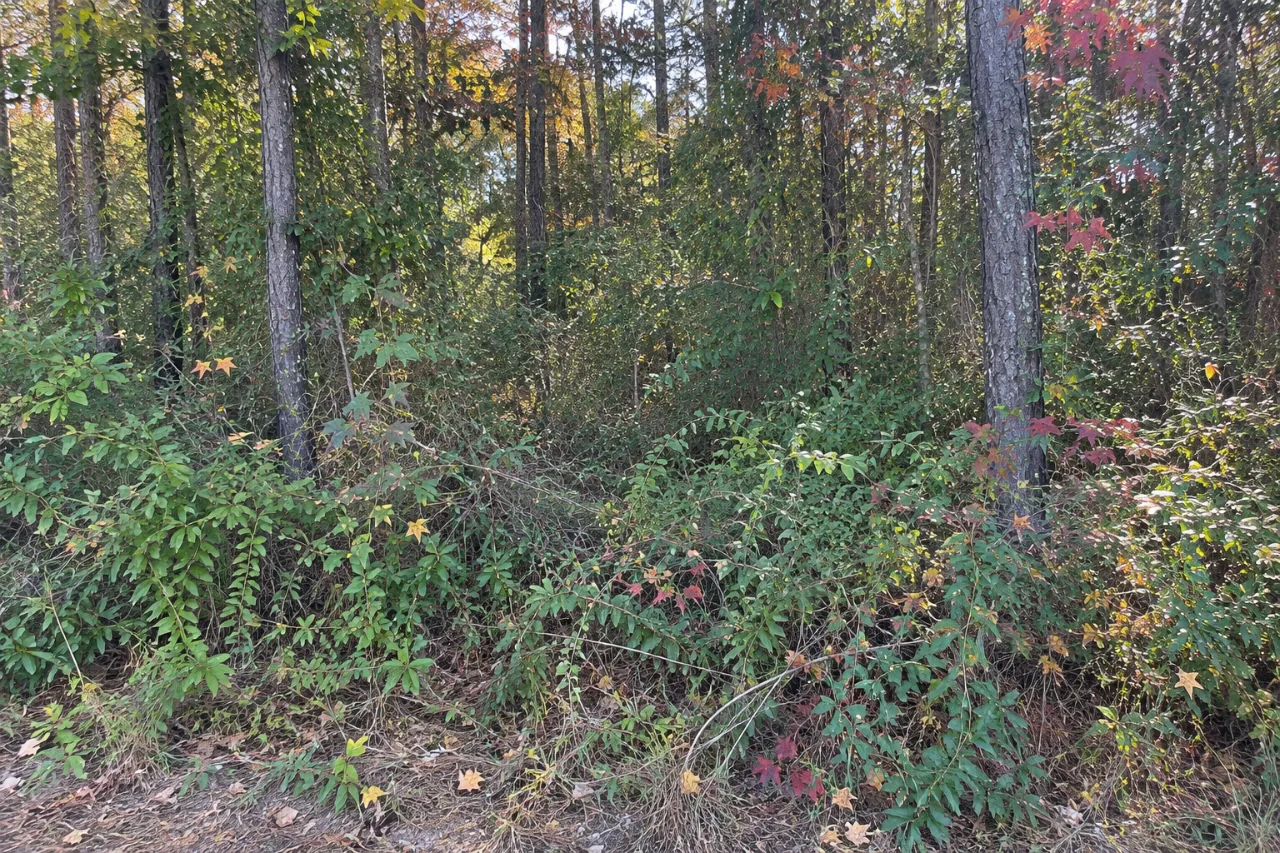
What usually fills in Sussex County woods
NRCS lists white oak, sweetgum, loblolly pine, and American holly as the main trees on Henlopen soils, one of the sandy upland series described from Sussex County, and adds sassafras and dogwood on Rosedale soils. On wetter flats, Fallsington soils carry red maple, sweetgum, and black gum. Under those trees, the usual tangle includes:
- Greenbrier, the thorny vine that knits a thicket together and makes walking through it miserable.
- Japanese honeysuckle and multiflora rose, both on Delaware's invasive plant list.
- Holly and sweetgum seedlings and sprouts, often so thick that the forest floor disappears.
- Other listed invasives that turn up at woods edges, such as autumn olive, Japanese stiltgrass, mile-a-minute weed, porcelain berry, Oriental bittersweet, Japanese barberry, and Callery pear.
- Phragmites in ditches and low, wet ground. Delaware lists the European reed, Phragmites australis subsp. australis.
Decide what stays before anything is cut
Underbrushing works best when the keepers are chosen first. Walk the woods and tie bright flagging on the loblolly pines, oaks, hollies, dogwoods, and anything else you want to see standing afterward. Mark the property line, the well, and any septic parts, and decide whether you want a clean floor everywhere or a few patches of native cover left for birds and privacy. Then walk it again with the contractor before the machine starts, and write down how close the equipment will work to kept trunks.
How the work gets done
- Forestry mulcher. The fastest way through thick holly, greenbrier, and saplings. It leaves a layer of chips and no piles. See forestry mulching.
- Rotary brush cutter. A heavy mower on a track loader or tractor, for lighter growth and follow-up passes.
- Hand crews with saws and brush cutters, close to the house, along fences, and around trees that need extra care.
- A mix. Machines in the open woods and hand work at the edges is one way to keep the trees you care about intact.
Because nothing can be burned (DNREC prohibits burning land-clearing material unless it's for agriculture), cut brush is mulched, chipped, or hauled. Debris without burning explains each.
What comes back, and how to keep it down
Mulching and cutting remove the top growth but leave the roots, so plants that resprout from roots or stumps will try again. Expect vines and hardwood sprouts to try again. Plan on follow-up in the first season or two: a mower or brush-cutter pass, a second light mulching, or spot treatment of the worst patches. For herbicide questions, the Delaware Department of Agriculture's pesticide line is 302-698-4571.
Close to a tax ditch the rules are tighter. DNREC's right-of-way fact sheet asks owners to mow with the blade set as high as possible, avoid broad-spectrum herbicides, and hire a licensed professional for controlling unwanted plants there.
Phragmites is a separate problem
DNREC's phragmites page says the plant spreads through rhizomes that can reach "as much as three feet" down and "more than 30 feet" out, and that it "cannot be controlled by mowing or burning alone." Delaware's Phragmites Control Cost-Share Program, run by the Division of Fish and Wildlife with USDA's Natural Resources Conservation Service, lets landowners enroll 5 to 200 acres and applies herbicide by helicopter in the fall for three years in a row. DNREC notes it has long grown in Delaware's marshes; where it stands in wet ground, call DNREC's Wetlands and Waterways Section, 302-739-9943, before any machine work in it.
Rules that can still apply
- Land disturbance. The state requires an approved plan before disturbing 5,000 square feet or more. Whether underbrushing that leaves the roots counts is a question for the Sussex Conservation District, (302) 856-2105.
- Wetlands. Low woods with standing water in winter and spring may be wetlands. See wet lots and tax ditches.
- Tax ditches. Trees in a right-of-way can be flush cut, but stumps can't be removed. The Tax Ditch Program is at 302-855-1930.
- Subdivision buffers and open space. If your lot is in a subdivision, check the recorded plat and any community rules before clearing near the edges. Planning & Zoning, (302) 855-7878, can tell you what the county approved.
What underbrush clearing costs
HomeAdvisor's forestry mulching guide (checked October 2026) charges out underbrush and small trees at $125 to $200 an hour nationally; heavy, dense brush runs $200 to $400 an hour, and most per-acre jobs fall between $400 and $1,500. Angi (checked October 2026) puts land clearing professionals at $110 to $250 an hour. All are national figures. Thick holly and greenbrier, lots of hand work around keepers, and hauling instead of mulching all push a Sussex County job up; open pine woods with light growth bring it down. The written quote after a walk-through is the real number.
Underbrush questions
Can the hollies be saved while the brush comes out?
Yes, if they're marked. Flag the ones you want, walk them with the contractor, and agree on how close the machine works. Hand crews can trim around the ones closest to the house.
Is one pass enough to clear underbrush for good?
Plan on more than one. Vines and hardwoods can regrow from the roots left in the ground, so budget for at least one follow-up mowing or spot treatment when comparing quotes.
Does underbrushing woods need a permit?
It depends on whether the work disturbs the soil and on what's nearby. Ask the Sussex Conservation District about the 5,000-square-foot plan rule, DNREC about wetlands, and the Tax Ditch Program about any ditch on the property.
How is underbrushing different from clearing a lot?
Underbrushing keeps the canopy and takes out what's below it, usually leaving stumps low and roots in place. Clearing for a house removes trees and stumps from the footprint so the ground can be built on. See lot clearing.
How the referral works
Send the rough size of the area, what's growing in it, which trees you want kept, and whether a ditch or wet spot runs through it. One independent contractor who does underbrush work in your part of Sussex County gets your request, walks it with you, and gives you a written price. You decide whether to hire them, and there's no cost for the referral.
Have land in Sussex County that needs clearing?
Call or send a few details. One independent contractor gets your request, and the referral costs you nothing.